15 Non Traditional Wedding Ceremony Ideas
Updated: Apr 20
Some couples know the exact moment they realize a standard script will not fit them. It might happen while reading sample vows that feel borrowed, or while imagining themselves standing in front of the people they love, saying words that sound polished but not true. That is often where the search for non traditional wedding ceremony ideas begins - not from a desire to be different for the sake of it, but from a quiet, honest wish to make the moment feel like your own.
A non-traditional ceremony does not have to mean unconventional in every detail. It simply means choosing elements that reflect your relationship, your values, your family, and the kind of promise you want to make. For some couples, that means rewriting the entire structure. For others, it means keeping the legal and emotional core intact while replacing formal habits with language and rituals that feel more natural.
Why non traditional wedding ceremony ideas matter
The ceremony is the heart of the day. Long after the flowers are gone and the timeline has blurred, many couples remember the feeling of being fully present with one another while their story was spoken out loud. When the ceremony feels generic, that emotional center can get lost. When it feels personal, even simple moments carry weight.
This is why non traditional wedding ceremony ideas resonate so deeply. They create room for honesty. They make space for blended families, for spiritual-but-not-religious couples, for introverts who do not want a performance, and for partners who want the occasion to feel sacred without feeling stiff. They also allow you to honor tradition selectively, rather than following it out of obligation.
There is, of course, a balance to strike. A ceremony can be deeply original and still feel grounded. In fact, the most moving ceremonies are often not the most elaborate. They are the ones where every choice has intention behind it.
Non traditional wedding ceremony ideas that still feel meaningful
Start with a story, not a script
One of the most powerful shifts a couple can make is to open the ceremony with a story about who they are. This might include how you met, what changed as your relationship deepened, the challenges you have walked through, or the qualities that make your bond feel steady and alive.
A story-centered opening invites guests into something more intimate than a formal event. It gives context to the vows that follow. It also helps the ceremony sound like it belongs to two real people, not to a template. If you are private, the story does not need to reveal everything. A few well-chosen details can say more than a long recap.
Invite loved ones to speak in a personal way
Readings are common, but they do not have to come from traditional wedding texts. A sibling might share a short reflection. A close friend might read a passage from a novel that has meaning in your relationship. A parent or grandparent might offer a blessing in their own words.
This can be especially beautiful for couples who want family involvement without turning the ceremony into something crowded or chaotic. The key is thoughtful curation. Two or three voices can add warmth. Too many can dilute the emotional rhythm.
Write vows that sound like you
Personal vows remain one of the clearest ways to make a ceremony feel authentic. Not every couple wants to write entirely from scratch, and that is perfectly fine. Some prefer to begin with a guided structure and then add their own promises. Others feel most comfortable speaking simple, direct language.
The goal is not to perform poetry. The goal is to tell the truth. A meaningful vow can be tender, funny, steady, or deeply reflective. What matters is that it sounds recognizable when it comes from your mouth. If one partner is naturally expressive and the other is more reserved, your vows do not need to match line for line. They only need to feel sincere.
Choose a unity ritual with real resonance
Many couples want a visual ritual but are unsure which one feels right. The best choice is usually the one that reflects your life rather than a trend. You might blend soil from meaningful places, light candles in memory of loved ones, ring a bell together, share a cup, plant a tree, or create a small ritual around written intentions.
A unity ritual works best when it has emotional logic. If you love nature, planting may feel natural. If your relationship is rooted in hospitality, sharing wine or tea may feel more true. If you come from different cultural or spiritual backgrounds, a custom ritual can gently honor both without forcing either into the background.
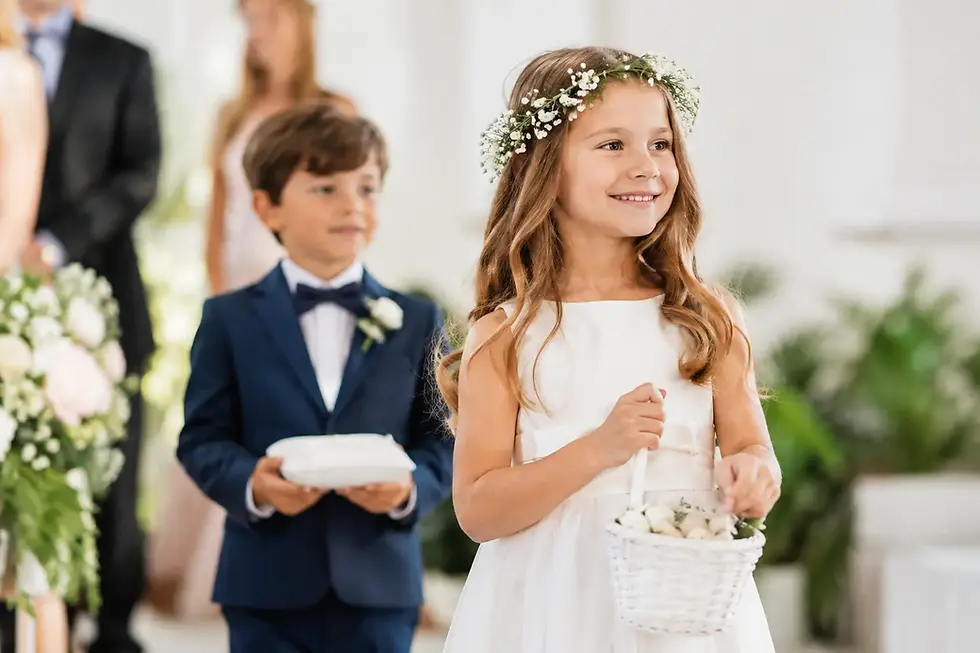
Include children in a visible, loving way
For blended families, the ceremony is not only about a couple. It is also about the shaping of a new family unit. Children can participate by offering readings, joining a family vow, adding an object to a shared ritual, or receiving words of commitment alongside the couple.
This moment should be handled with care. Children do not need to carry emotional pressure or be asked to promise too much. But when included thoughtfully, they can feel seen, safe, and genuinely part of what is happening.
Mark a moment of remembrance
Joy and grief often sit close together on wedding days. A non-traditional ceremony can make room for both. You may wish to name loved ones who cannot be present, leave an empty chair, include a short moment of silence, or weave remembrance into the opening words.
This does not make the ceremony heavy. More often, it makes it honest. Acknowledging absence can deepen presence. It allows the day to hold the full truth of your life, not just the polished parts.
How to choose the right non traditional wedding ceremony ideas
The most memorable ceremonies are rarely built by collecting random creative elements. They are shaped by a few deeper questions. What do you want your guests to understand about your relationship? What kind of emotional atmosphere do you want to create? What parts of tradition comfort you, and what parts feel distant or performative?
If you begin there, your choices become clearer. A couple who values quiet intimacy may want a brief ceremony with sparse language and one meaningful ritual. A couple with a large, expressive family may want more shared participation and spoken blessings. A couple with different belief systems may want language centered on love, commitment, and community rather than one religious framework.
This is also where a skilled officiant becomes invaluable. The role is not just to pronounce you married. It is to listen for the shape of your story and help translate it into a ceremony that feels emotionally true, legally sound, and beautifully paced. That collaborative process matters, especially when you are moving beyond familiar forms.
What to keep in mind as you personalize your ceremony
There is freedom in designing a ceremony that reflects your life, but freedom comes with choices. If you add too many ideas, the ceremony can begin to feel busy. If you remove every recognizable element, some guests may struggle to follow the emotional arc. Neither outcome is wrong, but both are worth considering.
It helps to think in layers. Keep a clear foundation: welcome, story, vows, exchange of rings or another symbol of commitment, pronouncement. Then personalize around that structure. This creates a ceremony that feels original without feeling unmoored.
Practical details matter too. Outdoor rituals need weather plans. Group participation needs clear direction. Private vows during a public ceremony need timing and flow. Meaning is at the center, but logistics support the experience.
For couples in Ontario who want something intimate, story-driven, and thoughtfully crafted, this is where personalized officiant work can make a profound difference. Ceremonies By Hans approaches the ceremony not as a formality to fill, but as a sacred moment to write with care.
When tradition and non tradition can live together
Some of the most beautiful ceremonies are not fully conventional or fully unconventional. They borrow with intention. You might keep a processional but replace formal language with warm, modern wording. You might include rings and vows while removing anything that feels outdated or impersonal. You might honor a family custom while building the rest of the ceremony around your own voice.
This middle ground is often where couples feel most at peace. It allows space for family expectations, personal comfort, and emotional authenticity all at once. A wedding ceremony does not have to prove anything. It only has to feel true to the people standing at its center.
If you are choosing between what is expected and what is meaningful, let meaning lead. The ceremony is one of the few parts of the day that cannot be outsourced to décor, schedule, or trend. It is the moment where your relationship is witnessed, named, and blessed in whatever language feels most like home. That is reason enough to shape it with intention.


Comments