Including Children in Your Wedding Ceremony
A child’s small hand in yours can say something powerful at a wedding: this marriage is not beginning in isolation. It is joining lives, histories, hopes, and perhaps a family already in motion. Including children in wedding ceremony planning can make that truth visible in a way no decoration or reception detail ever could. Done thoughtfully, it gives them a place in a sacred moment without asking them to carry more emotion, attention, or responsibility than is right for their age.
For couples blending families, marrying with children of their own, or simply honoring beloved nieces, nephews, godchildren, or young relatives, the question is not whether children belong. It is how to include them in a way that feels genuine to your family.
Begin with belonging, not a job title
Before choosing between flower petals, ring-bearing, or a reading, consider what you want a child to feel. The most meaningful role may not be the most visible one. Some children love being in front of a crowd; others would rather stand close to a trusted adult, help prepare a small keepsake, or offer a hug after the ceremony.
A wedding can bring up layered emotions for children, especially when it marks a new chapter in a blended family. They may feel delighted and proud, but also uncertain about what will change. A meaningful invitation to participate tells them, “You matter here. You are part of this family story.” It should never feel like a test of affection or a performance they have to get right.
Speak with them early, in language they can understand. Explain what the ceremony will be like, who will be there, and what their role could involve. Then listen. A child who says no to walking down the aisle may be saying yes to a quieter role that suits them far better.
Meaningful ways of including children in wedding ceremony moments
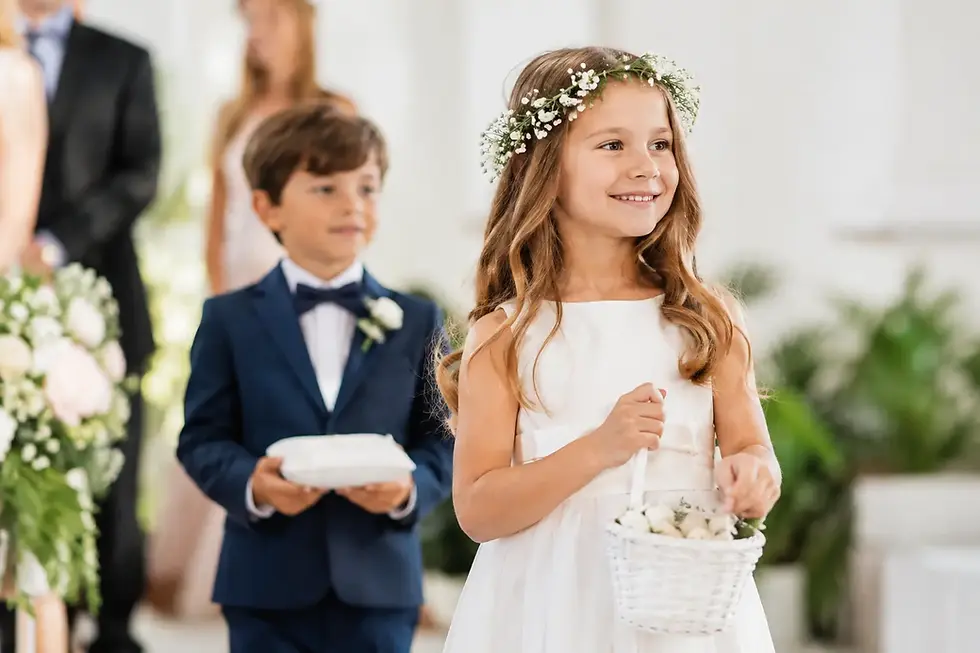
Traditional roles can be beautiful, particularly when they match a child’s personality. A confident child may happily scatter flowers, carry a sign, walk beside a parent, or bring forward the rings with an adult nearby. But the ceremony can hold many more personal possibilities.
Older children and teens may offer a short reading, share a wish for the couple, light a candle, pour water or sand into a shared vessel, or bring forward a family memento. A child who enjoys art could create a small drawing to be placed near the ceremony space. One who loves music might choose a processional song or play a simple instrumental piece, if that feels comfortable.
For children who would rather not speak or walk alone, inclusion can be quieter. They might sit in the front row with a special person, stand with the wedding party for one brief portion of the ceremony, or join the couple after the vows for a family embrace. A handwritten note, read privately before the ceremony, can be just as meaningful as a public role.
There is also beauty in honoring children through the words of the ceremony itself. An officiant can acknowledge that the marriage is being witnessed and supported by the children who share in the family’s daily life. This is often more resonant than asking a shy child to perform. The language should be sincere and specific, never placing adult expectations on young shoulders.
A family vow, with care
Some couples choose to include a family promise. This can be a tender ritual when it is shaped with honesty. Rather than making sweeping promises that sound ceremonial but may feel unrealistic, choose words rooted in daily care: listening, making room for each other, showing kindness, and continuing to learn what each person needs.
It is wise to be especially gentle with blended-family vows. A wedding does not instantly create trust, erase grief, or settle every uncertainty. A child should never be asked to promise to love a new stepparent or to call them Mom or Dad. The more respectful approach is to honor the relationship that is being built, at its own pace.
A family promise might invite children to respond with a simple “We do” if they want to. It can also be spoken by the adults alone, as a commitment made in the child’s presence. Consent matters, even in the smallest ceremonial gesture.
Match the role to the child, not the wedding vision
A child’s age and temperament matter more than the photo you have imagined. Toddlers can be delightful and unpredictable. They may make it halfway down the aisle, then turn around, sit down, cry, or decide that a nearby flower is more interesting than the ceremony. That is not a failure. It is simply childhood appearing in an adult-planned moment.
For younger children, keep the task simple and give them an exit plan. Let them walk with a familiar adult. Have a parent, grandparent, or caregiver waiting in the front row. Skip anything precious or breakable. If they do not make it down the aisle, they can still be warmly welcomed in whatever way the moment allows.
School-age children often enjoy knowing exactly what comes next. A short rehearsal, a clear explanation, and a chance to practice can make all the difference. Teens deserve a real voice in whether and how they participate. They may be honored to give a reading or stand with you, or they may prefer privacy. Either choice can be an expression of trust.
Avoid telling children they are “in charge” of making the day special. The day is already special because they are part of your lives. Their only job is to be themselves.
Plan for comfort when children are part of the ceremony
Thoughtful preparation protects the emotional center of the day. If the ceremony is long, formal, outdoors in warm weather, or scheduled near nap time, build in flexibility. A child-friendly wedding does not mean every moment revolves around children. It means their needs have been considered with kindness.
Choose comfortable clothing and shoes, especially for younger attendants. Keep a quiet activity, water, and a familiar snack nearby. Designate one caring adult who is not part of the couple or wedding party to be the child’s point person. This person can step out with them if needed, offer reassurance, and help them return when they are ready.
Rehearse the feeling of the ceremony, not only the choreography. Show children where they will stand and where their safe person will be. Tell them that if they feel nervous, they can wave, hold a hand, sit down, or leave with their caregiver. When children know they have options, they are often more relaxed.
It also helps to release the expectation of perfect photographs. Some of the most cherished images are the unscripted ones: a child leaning into a parent’s side, laughing at the wrong moment, or holding a bouquet with intense seriousness. These are not interruptions to the story. They are the story.
Let the ceremony reflect the family you are becoming
There is no single right way to make room for children. A quiet acknowledgment may be perfect for one family. Another may want a joyful unity ritual, shared promises, and children standing close throughout. The right choice is the one that feels emotionally true, not the one that looks most impressive from the aisle.
At Ceremonies By Hans, personalized ceremony writing makes room for these nuances. The words can honor a child’s place in the family without overstating what they feel or asking them to perform a role that does not fit. A ceremony becomes more soulful when each person is seen clearly.
As you make your plans, leave space for the unexpected. A child may forget their line, drop the petals, or choose a last-minute cuddle instead of a grand entrance. Meet that moment with warmth. Years from now, what they may remember most is not whether everything went according to plan, but that they were welcomed into a moment of love with gentleness, patience, and an open heart.


Comments