
Ontario Marriage Ceremony Guide for Meaningful Vows
A wedding can be beautifully styled, generously hosted, and filled with people you love - yet the moment that stays with you is often the one where you turn toward each other and speak your promises. This Ontario marriage ceremony guide is for couples who want that moment to feel personal, legally sound, and unmistakably their own.
In Ontario, getting married involves a few necessary legal steps. But the ceremony itself can be far more than a requirement between the photos and the reception. It can be a sacred pause: a chance to name the story that brought you here, honor the people who shaped you, and step into marriage with words that carry real weight.
Begin With the Legal Foundation
A meaningful ceremony rests more easily when the practical details are cared for. In Ontario, most couples need a valid marriage license before the ceremony. You can apply through a municipal office, and the license is generally valid for 90 days from the date it is issued. It is wise to confirm the current requirements, appointment process, and identification needed with the municipality where you plan to apply.
Your marriage must be solemnized by someone authorized to perform weddings in Ontario, such as a registered religious officiant or a judge, justice of the peace, or municipal clerk. Your officiant will also guide the legal portion of the ceremony and complete the required paperwork after you are married.
You will need two witnesses present for the signing. Choose people who will be calm, attentive, and happy to share in this intimate responsibility. They do not need to make speeches or stand at the front, though many couples invite a sibling, close friend, adult child, or parent to take on this role.
After the ceremony, you will receive a Record of Solemnization of Marriage. Keep it in a safe place. It is not the same as an official marriage certificate, which you may need later for matters such as changing a name or updating benefits. That certificate is ordered after the marriage has been registered with the province.
Legal requirements matter, but they do not have to make the ceremony feel clinical. A thoughtful officiant can hold the structure with quiet confidence, leaving you free to be present with each other.
Choose the Feeling Before the Format
Before deciding whether you want a traditional processional, a unity ritual, or a reading, consider a more tender question: How do you want the ceremony to feel?
Perhaps you want it to be joyful and relaxed, with gentle laughter woven into the story. Perhaps you are drawn to something reverent and reflective, with room for tears and silence. Maybe you are blending families, honoring a cultural heritage, or creating a secular ceremony that still feels deeply spiritual. There is no single right shape for a wedding ceremony. There is only the shape that tells the truth about your relationship.
This is where couples often discover the difference between a standard script and a custom ceremony. A template may cover the expected moments, but it cannot know how you met, what you have endured together, or the small, ordinary ways you care for one another. Those details are the heart of the day.
When you meet with an officiant, share more than logistics. Talk about the proposal, the people you miss, the traditions you want to keep, and the ones you are ready to release. Share your hopes for marriage, not just for the wedding. The more honestly you are heard, the more the ceremony can sound like it belongs to you.
Build a Ceremony That Sounds Like You
Most Ontario wedding ceremonies include a welcome, an expression of intent to marry, vows, an exchange of rings, a declaration of marriage, and the signing of the license. Within that framework, there is generous room for personality.
Tell Your Story With Care
A ceremony story is not a biography. It does not need every date, every vacation, or every chapter of your relationship. The most resonant stories choose a few meaningful threads: the unexpected way you found each other, the steadiness you offered during a difficult season, or the values you return to when life becomes complicated.
The goal is not to perform your relationship for guests. It is to let the people who love you witness its truth. A well-written story can bring warmth and laughter without turning either partner into the subject of a roast. It can be honest without sharing what belongs only to the two of you.
Decide What You Want to Promise
Personal vows can be among the most powerful parts of a wedding, and they can also feel intimidating. You do not need to write a perfect speech. Start with what you know: what you admire in your partner, what marriage means to you, and how you intend to show up in the years ahead.
Some couples prefer to write separate vows and keep them private until the ceremony. Others feel more comfortable agreeing on a shared structure so their vows have a similar tone and length. Either approach can be beautiful. If public speaking makes you anxious, you may choose short repeat-after-me vows during the ceremony and exchange longer private letters later. Meaning does not depend on the length of the microphone moment.
Include Rituals Only When They Carry Meaning
A ring exchange may be all you need. Or you may feel called to include a handfasting, a candle lighting, a wine ceremony, a tree planting, or a family blessing. A ritual can create a memorable visual moment, especially when it reflects your heritage, spirituality, or shared values.
Still, not every symbolic act needs to be added. A ceremony becomes more powerful through intention, not accumulation. If a ritual feels borrowed or confusing, let it go. The most moving choice is often the one that feels natural to you.
Make Room for the People Who Matter
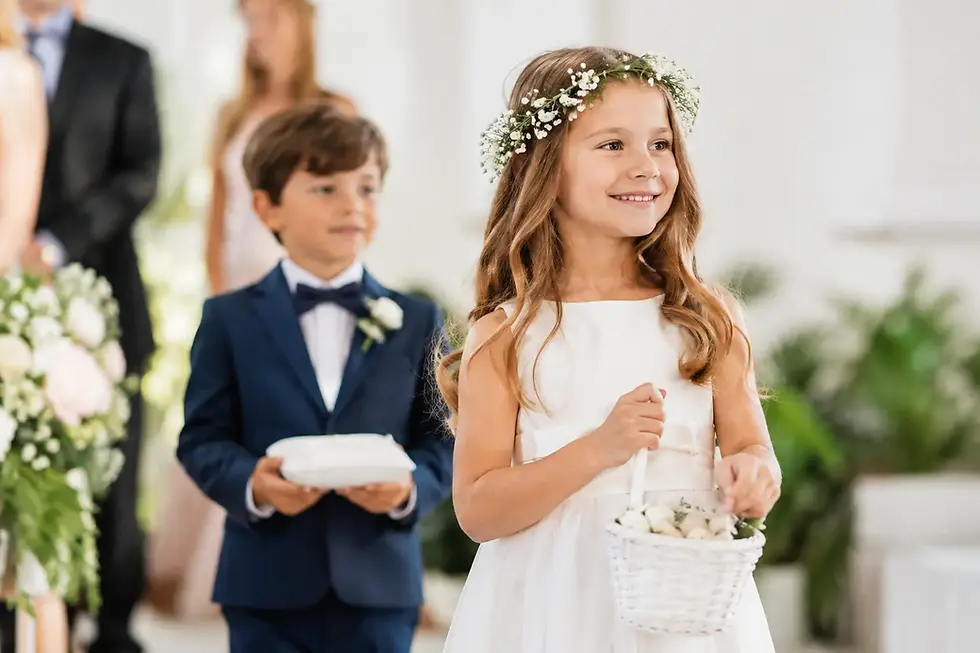
A wedding ceremony is centered on the couple, but it can also honor the circle that holds them. You might invite loved ones to offer a reading, speak a blessing, or participate in a family ritual. If children are part of your lives, a few carefully chosen words can acknowledge the new family being formed without placing pressure on them to perform a role they did not choose.
You may also wish to recognize absent loved ones. This can be done with a simple line in the ceremony, a moment of silence, or a private gesture before guests arrive. The right approach depends on your family and the emotional tone you hope to create. There is tenderness in naming someone who should have been there, and tenderness, too, in holding that remembrance quietly.
For intimate weddings in Barrie, Angus, Alliston, Wasaga Beach, Borden, and surrounding Simcoe County communities, the setting often offers its own language. A backyard, a waterfront, a family property, or a small gathering space can make a ceremony feel especially close. Let the location support the experience, but do not rely on scenery to create meaning. Your words, presence, and promises do that work.
Rehearse the Parts That Help You Be Present
You do not need to rehearse every breath. But a brief walkthrough can settle nerves and prevent small distractions from pulling focus on the day. Confirm where each person will stand, who carries the rings, how the signing will happen, and whether you will walk in together or separately.
If you are holding a ceremony outdoors, have a weather plan that is practical rather than hopeful. Wind can make papers difficult to manage, rain can change sound and seating, and a beautiful open field may have no shade at all. Your officiant should be able to adapt the ceremony with grace, but a little planning gives everyone more ease.
The same is true for sound. At a larger gathering or a windy outdoor venue, consider whether guests will be able to hear your vows. A microphone is not unromantic. It is an act of inclusion, allowing the people you invited to receive the words you worked so hard to say.
Let the Ceremony Be a Threshold
A wedding ceremony is not a performance to get through. It is a threshold between the life you have known together and the commitment you are choosing to make visible. The legal words make the marriage official. The personal words make the moment yours.
At Ceremonies By Hans, this is approached as a collaborative act of listening and storytelling, shaped around the couple rather than fitted into a prewritten mold. Whether your gathering is grand or quietly intimate, the ceremony deserves the same care as every other part of the day.
When the music begins and the room falls still, you do not need to be perfectly composed. You only need to look at the person you love, breathe, and let the promises you have chosen carry you forward.


Comments