Writing Your Own Wedding Vows vs Letting the Officiant Craft Them
When planning a wedding, one of the most personal and memorable moments is exchanging vows. Couples often face a choice: should they write their own vows or let the registered officiant create them? Both options have unique benefits and challenges. As someone who has helped many couples navigate this decision, I want to share insights that can help you decide what fits your wedding style and personality best.

Why Writing Your Own Vows Can Make Your Wedding More Personal
Writing your own vows lets you express your feelings in your own voice. It’s a chance to share promises that truly reflect your relationship and values. Many couples find this process rewarding because it adds a layer of intimacy and authenticity to the ceremony.
Personal connection: Your words come straight from the heart, making the moment deeply meaningful.
Unique promises: You can include specific memories, inside jokes, or future hopes that only you and your partner understand.
Creative freedom: You decide the tone—whether it’s romantic, humorous, or poetic.
For example, one couple I worked with wrote vows that included a promise to always dance in the kitchen, a small but meaningful ritual they shared. This made their wedding feel uniquely theirs.
That said, writing your own vows requires time and effort. Some couples worry about finding the right words or fear public speaking. If you’re unsure, a wedding planner can offer guidance or even workshops to help you craft vows that feel natural.
How Registered Officiants Can Create Meaningful Vows for You
On the other hand, letting the registered officiant write the vows can ease stress and ensure the ceremony flows smoothly. Experienced officiants know how to balance tradition with personalization, often tailoring vows to reflect your story without requiring you to write anything.
Professional experience: Officiants have crafted hundreds of vows and understand what resonates with guests.
Time-saving: You avoid the pressure of writing and rehearsing your own vows.
Legal clarity: Registered officiants ensure the vows meet any legal requirements for your wedding.
Some couples prefer this option because it allows them to focus on other wedding details or because they feel more comfortable with a familiar voice guiding the ceremony. For instance, a couple I know chose this route because their officiant included meaningful cultural references that honored their heritage, which they might not have known how to express themselves.
Balancing Both Approaches
You don’t have to choose one or the other exclusively. Many couples find a middle ground by writing their own vows but asking the officiant to help refine them. Others write short personal vows and let the officiant add traditional elements.
Here are some ways to blend both:
Write a few personal promises and let the officiant include classic vow phrases.
Share your story with the officiant and have them craft vows inspired by your relationship.
Use the officiant’s vows as a base and add a personal sentence or two.
Working with a wedding planner can help coordinate this process, ensuring your vows fit the tone and timing of your ceremony.
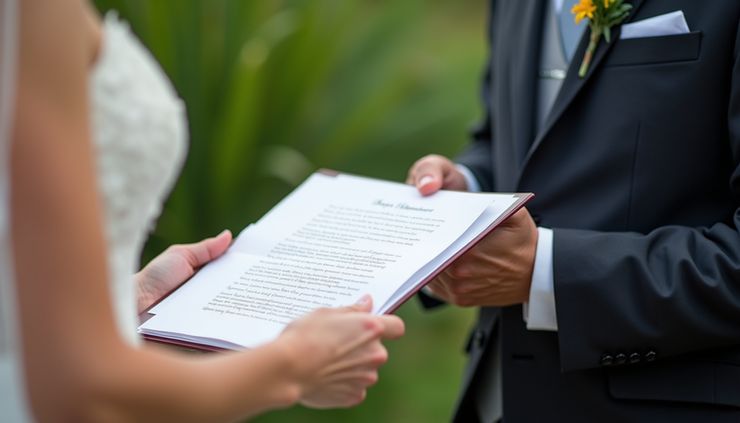
Tips for Writing Your Own Vows
If you decide to write your own vows, here are some practical tips:
Start early: Give yourself weeks to draft and revise.
Be honest: Speak from the heart rather than trying to impress.
Keep it brief: Aim for one to two minutes to hold attention.
Practice aloud: Rehearse to feel comfortable and natural.
Include promises: Focus on what you will do for your partner, not just how you feel.
When to Let the Officiant Take the Lead
Consider letting the officiant write the vows if:
You feel overwhelmed with wedding planning.
Public speaking makes you very nervous.
You want a traditional ceremony with minimal personalization.
Your officiant has a style you admire and trust.
Registered officiants often offer sample vows or custom options, so ask about what they provide before deciding.
Final Thoughts on Choosing Your Vows
Choosing between writing your own vows or letting the officiant craft them depends on your comfort level, personality, and wedding vision. Writing your own vows adds a personal touch that many couples cherish, but it requires time and courage. Officiants bring experience and ease, helping keep the ceremony smooth and meaningful.
Talk openly with your partner and your registered officiant or wedding planner about what feels right. Remember, the vows are a promise to each other, and whether you write them or not, the meaning behind them is what truly matters.


Comments