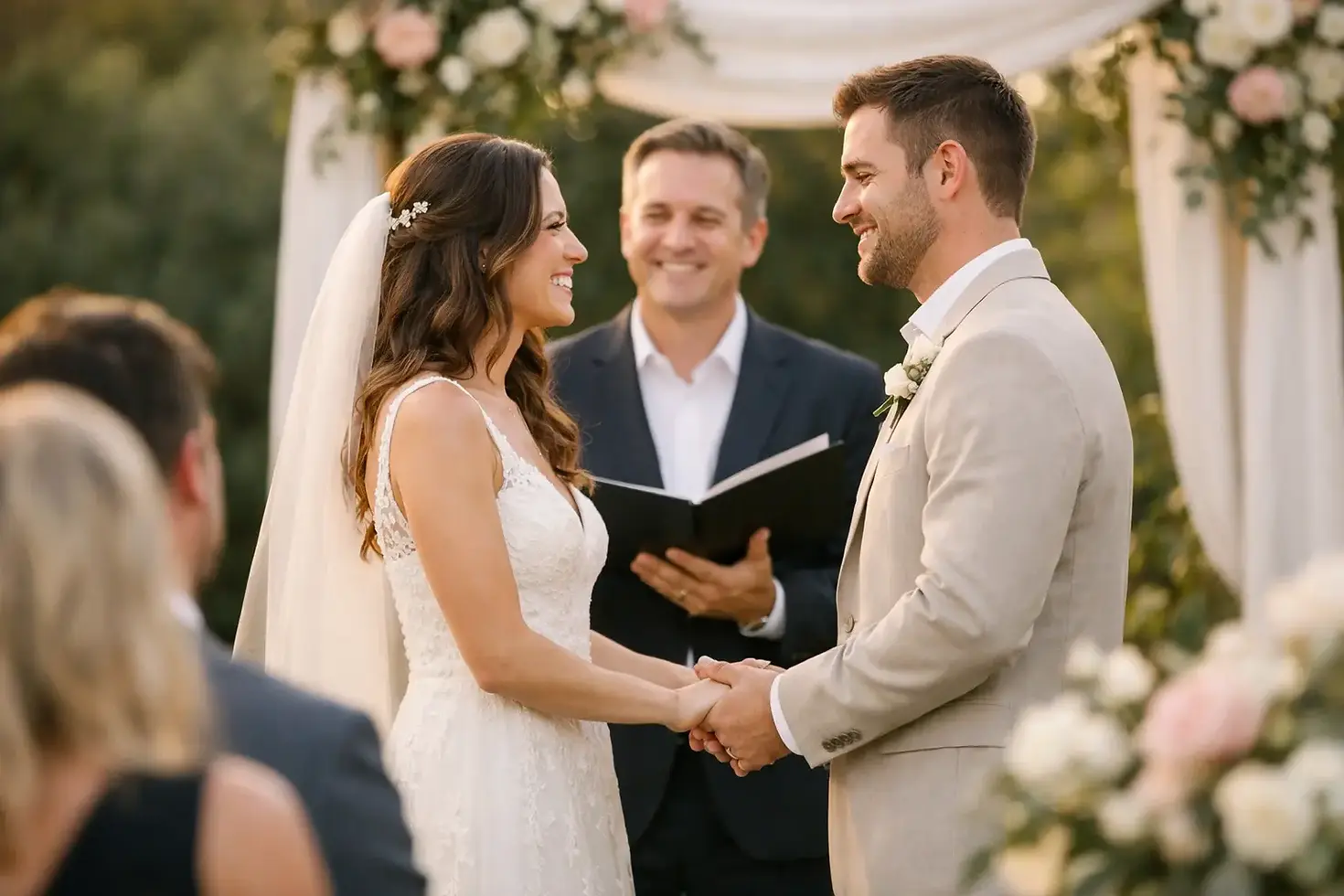
How a Personalized Wedding Ceremony Script Feels
Some couples can plan an entire wedding in a few months and still freeze when they reach the ceremony. Not the flowers. Not the music. The words. Because once you strip away the timeline, the seating chart, and the cake, what remains is the moment you stand in front of the people you love and say, with intention, this is who we are and this is what we choose.
That is why a personalized wedding ceremony script matters so deeply. It does more than guide the order of events. It gives shape to your relationship, your values, and the feeling you want to create in the room. The right ceremony script does not sound borrowed. It sounds like home.
What makes a personalized wedding ceremony script different
A generic ceremony usually does its job. It covers the legal pieces, includes familiar wording, and moves everyone from processional to pronouncement without issue. For some couples, that is enough.
But many couples want something more intimate than a standard template can offer. They want guests to hear the truth of their relationship in the ceremony. They want the language to reflect their beliefs, their family dynamics, their humor, their tenderness, and the life they are actually building together.
A personalized script is crafted around those details. It may include how you met, what carried you through a difficult season, the promises that matter most to you, or the way you define partnership. It can be spiritual, secular, modern, traditional, or gently woven from several influences at once. The point is not novelty for its own sake. The point is recognition. When the ceremony begins, you should feel seen.
A meaningful ceremony begins with listening
The most memorable ceremonies are rarely built from beautiful words alone. They begin with careful listening.
Before a script can feel soulful and true, someone has to understand the people at its center. That means more than collecting dates and preferences. It means listening for the emotional texture of your story. How do you speak to each other when you are relaxed? What do you admire in one another? What kind of commitment are you making, beyond the obvious one? Which traditions feel grounding, and which feel like they belong to someone else?
This is often where couples realize they do not want a performance. They want presence. They want a ceremony that feels calm, warm, and emotionally grounded rather than overly theatrical or stiffly formal.
There is also room for nuance here. Personal does not always mean highly detailed or publicly vulnerable. Some couples want their full story told. Others prefer a quieter touch, with just enough detail to feel authentic while keeping certain memories private. A thoughtful ceremony honors both approaches.
The parts of a personalized wedding ceremony script
Every ceremony has a structure, but that structure can be shaped with care. A personalized wedding ceremony script often includes a welcome, a reflection on the couple, readings or rituals, vows, the exchange of rings, and the pronouncement. The difference is in how each piece is written and why it is there.
The welcome sets the emotional tone
The opening words matter more than people realize. They tell your guests whether this will feel formal, lighthearted, sacred, relaxed, or deeply reflective.
A warm welcome can acknowledge the journey it took to gather everyone together. It can honor absent loved ones without turning the room heavy. It can invite guests into the moment in a way that feels inclusive rather than passive. In a custom ceremony, the welcome is not filler. It is the doorway.
Your story gives the ceremony its heartbeat
This is often the part guests remember most. Not because it is long, but because it is specific.
When a couple’s story is told well, it creates connection. People smile because they recognize you in the details. They tear up because they understand, perhaps more clearly than before, what this commitment means. The story section does not need to recount every chapter of your relationship. It simply needs to reveal something true.
Sometimes that truth is joyful and playful. Sometimes it is shaped by resilience. Sometimes it speaks to a blended family, a second marriage, a cross-cultural relationship, or a love that arrived later than expected. A handcrafted script leaves room for all of that.
Vows and ring exchange should sound like you
Many couples worry about vows because they think they need to become poets for a day. They do not.
The most powerful vows are usually clear, grounded, and sincere. They sound like promises real people can keep. If you are writing personal vows, your ceremony script should support them rather than compete with them. If you prefer repeat-after-me vows, those can still be beautifully customized to reflect your values and your voice.
The same is true for the ring exchange. A few carefully chosen lines can transform it from a procedural moment into a genuine expression of commitment.
Why personalization creates a stronger guest experience
Couples sometimes think personalization is only for them. In reality, it changes the experience for everyone present.
When guests hear a ceremony that reflects the couple honestly, they lean in. They feel invited into something real. Even those who do not know you well can sense the difference between language chosen out of habit and language chosen with care.
This matters because your ceremony is not just the lead-up to the celebration. It is the emotional center of the day. A meaningful script creates stillness in the room. It lets people witness rather than merely watch.
That said, there is a balance. A ceremony should feel personal, not exclusive. Inside jokes that only six people understand can create distance. Long stories can blur the emotional focus. The craft is in choosing details that are intimate yet welcoming.
When couples worry about making it too different
This concern is common, especially for couples navigating family expectations or mixed traditions. They want the ceremony to feel like them, but they do not want it to feel unfamiliar in a way that makes loved ones uncomfortable.
The good news is that personalization does not require abandoning tradition. It can mean refining it. You might keep a classic processional and ring exchange while reshaping the opening remarks and vows. You might include a reading from a family faith tradition alongside inclusive language that reflects your wider values. You might choose one symbolic ritual instead of three.
A ceremony does not need to be unconventional to be deeply personal. It needs to be intentional.
How to know if your script is truly right
A beautiful ceremony script is not measured by how impressive it sounds on paper. It is measured by how it feels when spoken aloud.
If the tone feels natural, if the transitions are smooth, if the words carry emotion without strain, you are close. If parts of it make you exhale and think, yes, that is us, you are closer still.
You should not feel like you are trying on someone else’s language. The script should fit the two of you, your relationship, and the atmosphere you want to create. Sacred and heartfelt can still be simple. Elegant can still be accessible. Emotional can still be calm.
This is one reason a collaborative process matters so much. When couples are given space to reflect, respond, and refine, the final ceremony becomes more than a script. It becomes a shared creation. That spirit of collaboration sits at the heart of what makes services like Ceremonies By Hans so meaningful for couples who want more than a standard ceremony.
The real gift of a personalized wedding ceremony script
Long after the music fades and the tables are cleared, the words remain. Not every sentence, perhaps, but the feeling of them. The hush just before the vows. The laughter that softened everyone. The line that felt so true it seemed to gather your whole story into one breath.
A personalized ceremony script gives your wedding something lasting. It marks the threshold you are crossing with honesty and care. It reminds you that this moment is not generic, because your love is not generic.
If you are planning your ceremony now, give the words the same attention you give the rest of the day. They carry more than information. They carry meaning, memory, and the first spoken shape of your marriage.


Comments