How to Personalize Your Wedding Ceremony
Updated: Apr 20
A wedding ceremony can be over in 20 minutes, yet it often becomes the part people remember most clearly. Not because of the flowers or the chairs, but because of the feeling in the air when the words sound true. If you're wondering how to personalize wedding ceremony moments so they feel like yours, the answer usually has less to do with doing something unusual and more to do with choosing what is honest.
The most meaningful ceremonies are not built from trends. They are shaped around the couple standing at the center of them - their history, their values, their humor, their grief, their hopes, and the life they are actually creating together. Personalization is not performance. It is recognition. It is hearing your own story reflected back to you in a way that feels grounding, intimate, and real.
What makes a ceremony feel personal
A personalized wedding ceremony does not need to be long, dramatic, or unconventional. It simply needs to sound like no one else's. That can come through in the language, the structure, the rituals you include, or even the pace of the moment.
For some couples, personalization means removing anything that feels borrowed or obligatory. For others, it means keeping tradition, but speaking it in a voice that feels more aligned with who they are. A ceremony can still be classic and feel deeply personal. It can also be modern, spiritual, interfaith, family-centered, quiet, joyful, or a little playful. There is no single right tone. There is only the tone that feels true when you imagine standing in front of the people you love.
One helpful way to think about it is this: every part of the ceremony should answer a simple question. Why is this here? If a reading, ritual, or phrase matters to you, it belongs. If it is there because weddings are "supposed" to include it, that is worth reconsidering.
How to personalize your wedding ceremony from the inside out
The strongest ceremonies usually begin with conversation, not formatting. Before choosing readings or music, spend some time naming what matters most.
Talk about the emotional atmosphere you want to create. Do you want the ceremony to feel reverent and still, warm and lighthearted, family-centered, or gently spiritual? Think about the moments in your relationship that define you as a couple. Maybe it was how you cared for one another during a hard season, the way you built a home together, or the ordinary habits that became the foundation of your bond.
This is also the time to talk honestly about what does not fit. Some couples do not want language that feels overly formal. Others are uncomfortable with references to obedience, gendered roles, or religious wording that does not reflect their beliefs. Personalization is as much about what you leave out as what you include.
When couples work with an officiant who listens well, these conversations become the raw material for a ceremony that feels handcrafted rather than assembled. That is where the depth comes from. Not from adding more elements, but from choosing the right ones.
Start with your story
Your story does not need to be extraordinary to be moving. In fact, the most affecting ceremony stories are often simple and specific. How you met matters, but so does what happened after. What did you notice in each other early on? What have you weathered together? What promises are already visible in the life you share?
A good ceremony story is not a full biography. It is a thoughtful distillation. It captures the heart of the relationship without turning the ceremony into a speech. The best versions sound natural when spoken aloud and recognizable when heard by the couple themselves.
If you are writing parts of the ceremony together, avoid trying to sound poetic for the sake of it. Clear, sincere language nearly always lands more deeply than something ornate but distant.
Personal vows are often the emotional center of a ceremony because they ask you to speak plainly about love, commitment, and intention. That does not mean they need to be lengthy or intensely private. It means they should feel believable coming from you.
Some couples prefer fully written personal vows. Others choose a blended approach, with a shared structure and a few personalized lines. That balance can be especially helpful if one person is expressive and the other is more reserved. The goal is not to match word count. It is to create a moment that feels equal in heart.
If writing your own vows feels intimidating, start by thinking less about performance and more about promise. What do you want to protect in this relationship? What do you want to practice? What do you hope your partner feels when they are loved by you over time, not just on your wedding day?
Rituals, readings, and music that carry meaning
The most resonant ceremony elements are the ones that connect to your actual life, heritage, or beliefs. A ritual does not become meaningful because it photographs well. It becomes meaningful because it symbolizes something you want to honor.
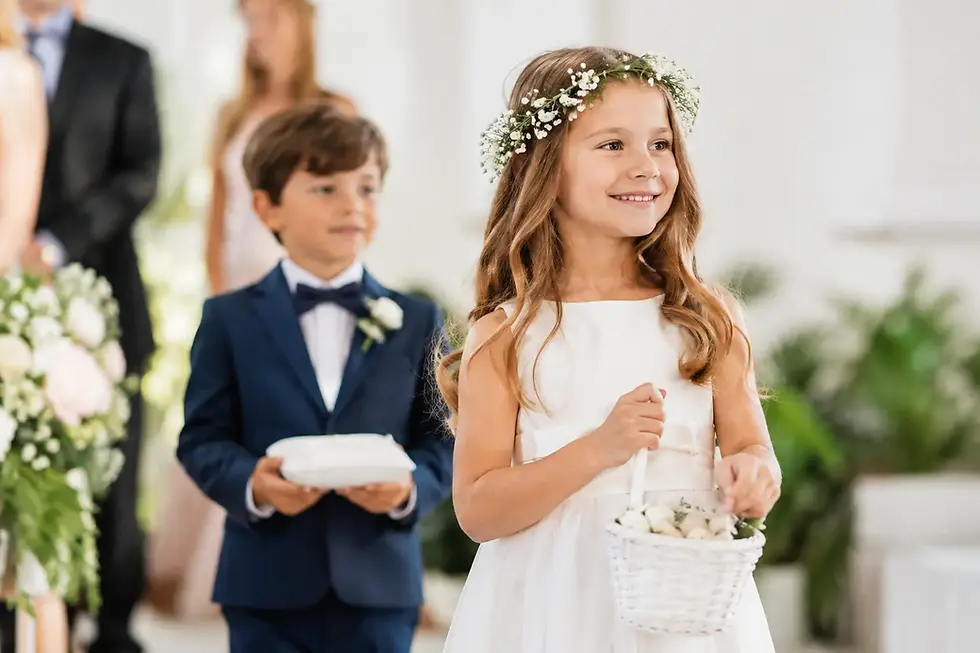
You might include a ring warming, a handfasting, a candle ritual, a shared cup, or a moment of remembrance for loved ones who have died. You may invite children or family members into the ceremony if your wedding marks the joining of a wider family story. You may also choose a quiet pause, a blessing, or a spoken reflection instead of a formal ritual.
The same principle applies to readings and music. A reading should sound like it belongs in the room. That might be a poem, a spiritual text, a literary excerpt, or even a short passage from something deeply personal to you both. Music can shape the emotional texture of the ceremony, but it should support the moment rather than overwhelm it.
There is a trade-off here worth naming. The more elements you include, the more layered the ceremony can feel, but too many can dilute its emotional clarity. Often, one or two deeply chosen pieces create more impact than a long sequence of loosely connected additions.
Make space for family, faith, and difference
Many couples are not just blending personalities. They are navigating family expectations, cultural traditions, religious backgrounds, previous marriages, children, or differing ideas about what a wedding should be. This is where personalization becomes especially valuable.
A ceremony can hold complexity with grace. It can honor family heritage without becoming rigid. It can include spiritual language without assuming a shared doctrine. It can make room for children in ways that feel tender rather than performative. It can acknowledge loss, distance, or blended family dynamics with care.
The key is intentionality. If one partner comes from a strong religious tradition and the other does not, the ceremony may need language that feels respectful to both. If parents expect certain customs, it may help to ask which traditions carry genuine meaning and which are simply familiar. Sometimes keeping one beloved ritual creates enough continuity to make space for newer, more personal elements.
This is also why a collaborative officiant matters. Someone experienced in custom ceremony writing can help you find language that bridges difference without flattening it.
Small details that change the whole feeling
When couples think about personalization, they often focus on the big moments. Yet some of the most powerful shifts happen in the smaller details.
How you are welcomed at the beginning matters. Whether guests are invited to be fully present, whether the ceremony acknowledges community support, whether your names are spoken with care - all of that changes the atmosphere. The transition into vows, the wording around rings, the final pronouncement, and the way you are introduced at the end all shape what the moment feels like from the inside.
Even the pacing matters. A ceremony that breathes, pauses, and allows emotion to land will feel more intimate than one that rushes from line to line. Personalization is not only about content. It is also about rhythm.
For couples in Simcoe County and surrounding communities who want the ceremony to feel handcrafted rather than formulaic, this is often where the difference becomes unmistakable. A custom-written ceremony through Ceremonies By Hans is designed to reflect not just your preferences, but the emotional truth of your relationship.
If you're worried about making it too different
That concern is more common than you might think. Many couples want something personal, but not so unconventional that it feels uncomfortable. The good news is that personalization does not require reinvention.
You can keep a familiar structure and still make the ceremony deeply your own. A welcome, a story, vows, rings, and a pronouncement can be more than enough if the wording is thoughtful and specific. On the other hand, if a fully non-traditional format feels right, that can be beautiful too. It depends on your comfort, your guests, and the kind of memory you want to create.
The measure of a successful ceremony is not originality for its own sake. It is whether you feel seen in it. Whether your guests leave saying, quietly and sincerely, that felt exactly like them.
A wedding ceremony is one of the rare moments in life when you are invited to speak your love out loud, in the presence of witnesses, with intention. Treat that moment gently. Let it be shaped by truth, not pressure. When the ceremony reflects who you are, it does more than mark a legal union. It becomes a sacred beginning you can actually recognize as your own.


Comments