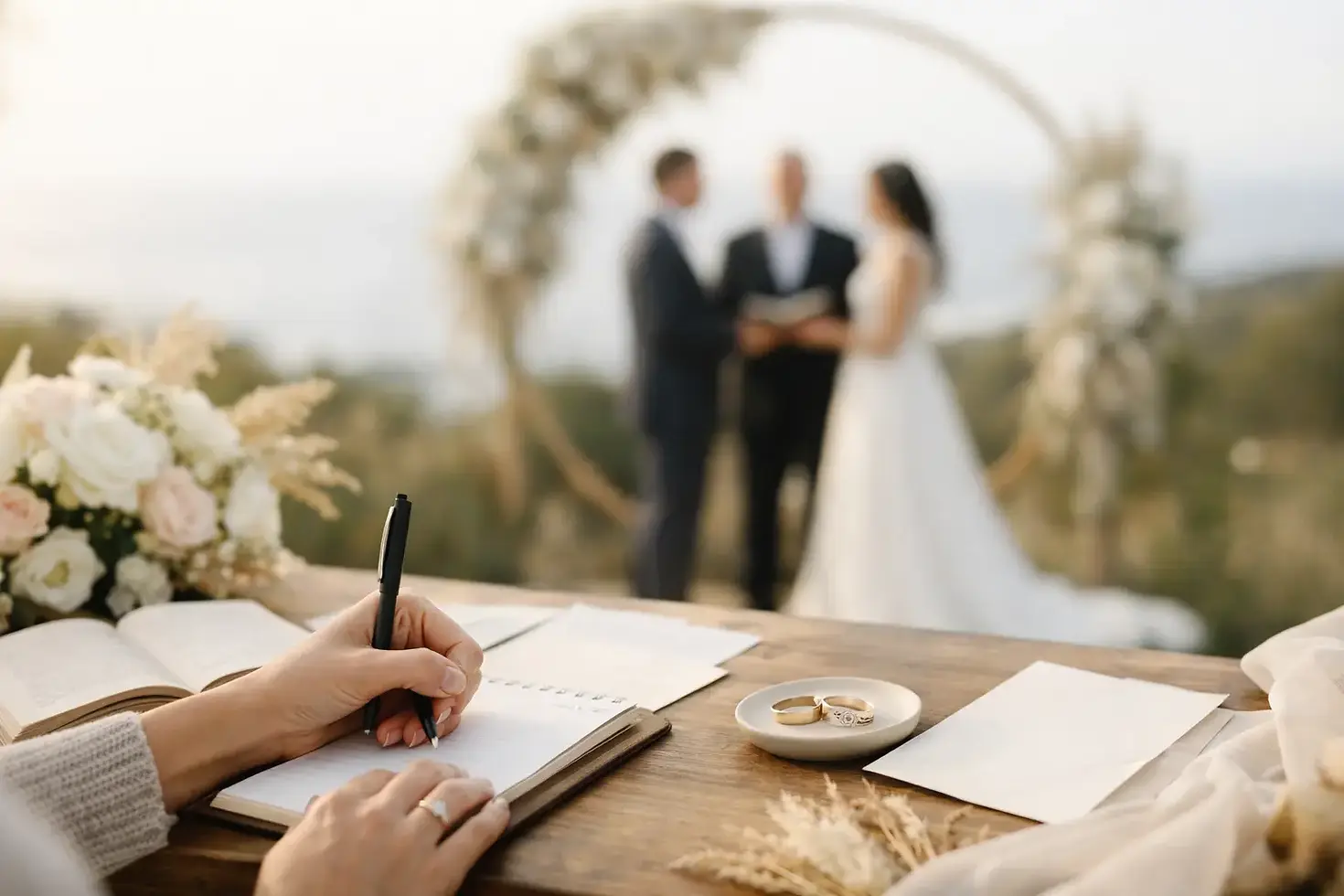
How to Plan Ceremony Wording That Feels True
The moment usually comes quietly. You are talking about music, timing, guest count, maybe where everyone will stand - and then you realize the words themselves matter just as much as the setting. If you are wondering how to plan ceremony wording, you are already asking the right question. The language spoken in that moment becomes the emotional shape of the ceremony. It tells your guests what this day means, and it gives you something even more valuable: words that feel like home.
For many couples and families, this is where planning shifts from logistics to meaning. A beautiful ceremony is not made memorable by sounding formal. It becomes memorable when the wording reflects who you are, how you love, what you honor, and what you want this moment to hold.
How to plan ceremony wording with heart
Start by deciding what the ceremony needs to do, not just what it needs to include. Those are not always the same thing. A legal wedding ceremony must contain certain elements. A vow renewal may not need legal language at all, but it often needs emotional truth. A family dedication may call for warmth, blessing, and community support rather than promises between partners.
Before you write a single line, ask yourselves a few grounding questions. What do you want people to feel in the room? What part of your story belongs in this ceremony, and what part feels better kept private? Do you want the tone to feel sacred, joyful, light, deeply emotional, or some blend of all three? These answers become the compass for every wording choice that follows.
That matters because ceremony language can easily drift into two extremes. On one side, it becomes so generic that anyone could have said it. On the other, it becomes so packed with inside references or performance pressure that it stops feeling natural. The sweet spot is language that is personal without becoming forced.
Begin with the emotional tone
Tone is the foundation. If you skip it, every decision after that feels disconnected.
Some people want a ceremony that feels reverent and timeless. Others want something relaxed, modern, and intimate. Many want both - a ceremony with emotional depth that still sounds like real people speaking. There is no correct style, but there is a style that fits your relationship.
A helpful way to find your tone is to think about how you want the opening words to land. Should they welcome guests into a sacred moment? Should they immediately reflect your personality? Should they acknowledge family, culture, or spiritual meaning? When the opening is right, the rest of the wording tends to settle into place.
This is also where inclusivity deserves careful thought. Traditional phrases can feel beautiful to one couple and alienating to another. Gendered wording, religious references, or assumptions about family roles may need to be adapted. Personalizing ceremony wording is not about removing meaning. It is about making sure the meaning truly belongs to you.
Choose the parts of the ceremony that need your voice most
Not every section needs the same level of customization. Some pieces benefit from structure. Others should feel unmistakably yours.
The welcome, the story, the vows, and any closing blessing usually carry the strongest emotional weight. These are often the places where guests lean in and where couples remember the most. If you are working within a ceremony framework, spend your energy there first.
For weddings, many couples want their story woven into the ceremony without turning it into a long speech. That balance matters. A few vivid details often do more than a full retelling of the relationship timeline. Instead of listing milestones, focus on what your story reveals. Maybe you built trust slowly. Maybe you became each other's calm. Maybe your relationship taught you both how to choose love with more intention. That is the material that gives ceremony language depth.
For vow renewals, the wording often works best when it honors both history and growth. This is not simply a repeat of your wedding day. It is a chance to speak from experience. The strongest renewal ceremonies tend to acknowledge what has been tested, what has endured, and what you are still choosing now.
For family dedications, warmth and clarity matter most. The wording should honor the child or children, recognize the role of parents or caregivers, and invite loved ones into a shared promise of support. It can be spiritual, secular, or somewhere in between, but it should feel generous and grounded.
Write for the ear, not the page
This is one of the biggest shifts people miss when planning ceremony wording. Beautiful writing on paper does not always sound beautiful when spoken aloud.
Ceremony language should breathe. Sentences need rhythm. A phrase can be poetic, but it should still feel natural in a human voice. If a passage feels stiff when read out loud, it will likely feel even stiffer in the ceremony itself.
Read everything aloud early. Then read it again more slowly. Listen for places where the wording gets too formal, too repetitive, or too abstract. Spoken ceremony language usually works best when it is clear, intentional, and emotionally honest. Simplicity is not a lack of depth. Often, it is what allows depth to land.
That is especially true for vows. Many people feel pressure to make vows sound profound, but the most moving vows are often the most grounded. Specific promises carry weight because they feel lived-in. Grand language can be lovely, but only if it still sounds like you.
Know where tradition helps and where it doesn’t
Tradition can offer shape, comfort, and continuity. It can also create pressure if you feel obligated to include language that does not reflect your values.
It helps to separate what is meaningful from what is merely familiar. If a classic declaration or ring exchange speaks to you, keep it. If a phrase feels borrowed rather than true, revise it. Ceremony wording is not less sacred because it is personalized. For many people, it becomes more sacred because it is spoken with full consent and recognition.
There are also practical trade-offs. Fully custom wording creates a deeply personal experience, but it takes more reflection and revision. Using a template can make the process easier, but it may leave the ceremony feeling flatter than you hoped. Many couples find that a blended approach works best: keep a clear structure, then personalize the moments that hold the most meaning.
How to plan ceremony wording without getting overwhelmed
If the process starts feeling big, narrow your focus. You do not need to perfect the entire ceremony in one sitting. Move section by section.
Start with the non-negotiables. That may be legal wording, a reading, a vow exchange, or a moment of remembrance. Then identify the emotional anchor of the ceremony. This might be your shared story, a central theme, or a few words that define what you want the ceremony to stand for - devotion, joy, resilience, belonging, gratitude.
Once you have that anchor, the rest becomes easier to edit. Every section should support the same emotional truth. If a line is pretty but does not fit the heart of the ceremony, let it go.
It also helps to decide what should be spoken by the officiant and what should be spoken by you. Some couples want to say more themselves. Others prefer the officiant to carry more of the ceremony's narrative and emotional structure. Neither approach is better. It depends on your comfort, your presence in front of a group, and the kind of experience you want to create.
A collaborative process often makes all the difference here. An experienced officiant can hear what you mean even when you do not yet have the words for it. That is often where a truly handcrafted ceremony takes shape. Ceremonies By Hans, for example, approaches wording as both a writing process and a listening process, which is often exactly what couples and families need when they want the ceremony to feel deeply personal.
Let the final wording feel like a mirror
The best ceremony wording does not try to impress a room. It reflects the people at the center of it with care and honesty.
If the words sound polished but not personal, keep refining. If they sound emotional but not quite natural, soften them. If they sound exactly like something you would never say, they are not finished yet. The goal is not to produce a perfect script. The goal is to create a moment where you hear your own values spoken back to you clearly.
That is what guests remember too. Not whether every phrase was eloquent, but whether the ceremony felt real. Whether it held tenderness. Whether it sounded like a promise, a blessing, a beginning, or a return that truly belonged to the people standing there.
When you plan ceremony wording with that kind of intention, the ceremony stops being a formality. It becomes a living expression of your story - spoken out loud, witnessed with love, and carried forward long after the day itself has passed.


Comments