Wedding Ceremony Outline That Feels Like You
Some ceremonies are over in ten minutes, and somehow still feel long. Others last half an hour and leave everyone feeling like time stood still. The difference is rarely the length. It is the shape, the pacing, and the meaning inside the words. A thoughtful wedding ceremony outline gives your day structure, but more than that, it helps create a moment that feels honest, grounded, and unmistakably yours.
For many couples, the outline is where the ceremony starts to feel real. You have the venue, the attire, the music, maybe even the seating chart. But the ceremony itself can still feel vague until you see how each part will unfold. That is often when couples realize they do not want a generic script. They want something that reflects their story, their values, and the kind of promises they are actually making.
What a wedding ceremony outline really does
At its best, a wedding ceremony outline is not a rigid formula. It is a framework that holds the emotional arc of the day. It helps everyone involved understand where the ceremony is going, when key moments happen, and how each element connects to the next.
That matters because ceremonies carry a lot at once. They need to be legally sound, emotionally resonant, and easy for guests to follow. They also need to fit the couple in front of the officiant, not some imagined version of what a wedding is supposed to look like.
A good outline creates flow. It gives space for tenderness, laughter, silence, and intention. It also helps prevent a ceremony from feeling crowded with too many readings, too many transitions, or too much explanation. When the outline is right, the ceremony breathes.
A simple wedding ceremony outline
Most ceremonies include the same core movements, even when the style is deeply personalized. The order can shift, and some elements may be expanded or removed, but the underlying rhythm is often familiar for a reason.
1. Processional
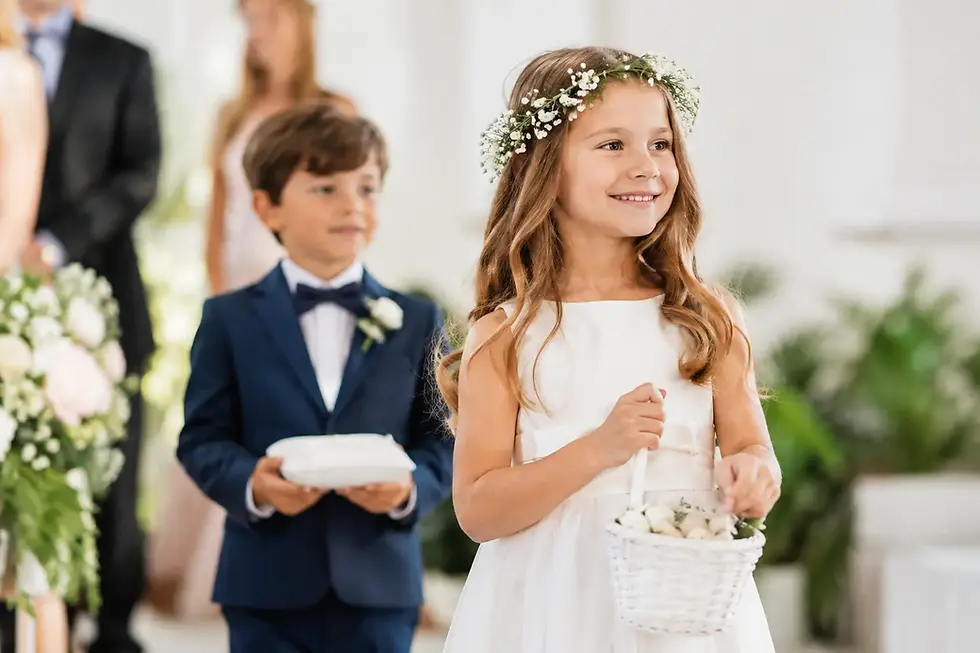
This is the opening movement, when people settle into the significance of what is about to happen. The processional may be traditional, nontraditional, or beautifully simple. Some couples walk in together. Some include parents, children, or chosen family. Some keep it minimal and intimate.
What matters is not whether it follows convention. What matters is that the entrance feels aligned with the relationship and the emotional tone you want to set.
2. Welcome and opening words
Once everyone is in place, the officiant welcomes the guests and marks the beginning of the ceremony. This is where the room shifts from watching to witnessing. The opening words can be warm, reverent, lighthearted, spiritual, secular, or somewhere in between.
This section is also where an officiant can acknowledge the significance of gathering together, honor absent loved ones if desired, and help guests arrive in the moment.
3. Statement about marriage or partnership
This part offers context and meaning. It may speak about marriage as a promise, a practice, a friendship, a covenant, or a shared path. For some couples, this is deeply spiritual. For others, it is grounded in partnership, mutual care, and everyday devotion.
There is no single right tone here. Some couples want lyrical language. Others want it plainspoken and sincere. The best version sounds like it belongs to the people getting married.
4. The couple's story
This is often the heart of a personalized ceremony. Instead of moving straight through formalities, the officiant tells some part of the couple's story - how they met, what they have weathered, what they cherish in each other, and what has brought them to this day.
This section can be brief or more developed. The trade-off is simple. A shorter story keeps the ceremony moving quickly. A fuller story creates a stronger sense of intimacy and emotional presence. Neither is better in every case. It depends on the couple, the setting, and the style of the day.
5. Readings, music, or ritual elements
If you are including a reading, a musical performance, or a unity ritual, this is often where it lives. A poem, a blessing, a handfasting, a candle lighting, a ring warming, or a moment of communal support can all fit naturally here.
The key is restraint. Not every meaningful option needs to be included. One or two carefully chosen elements usually land more deeply than a long string of symbolic gestures. If a ritual does not feel true to you, it will not become meaningful simply because it is common.
6. Declaration of intent
This is the clear moment where each person states their intention to marry. It is the part often recognized as the legal and ceremonial yes. Short as it may be, it carries tremendous weight.
Because this moment is so direct, it can be especially moving. There is power in simple language spoken with full presence.
7. Vows
For many couples, this is the most anticipated part of the ceremony. Personal vows can be tender, funny, poetic, or understated. Traditional vows can feel timeless and reassuring. Some couples choose a blend, speaking personal words and then repeating a shared vow.
This is one of the clearest examples of where it depends. Personal vows often feel intimate and unforgettable, but they require emotional labor and vulnerability. Shared vows can ease pressure and create a balanced rhythm, especially for couples who want the ceremony to feel centered rather than performative.
8. Exchange of rings
The rings give physical form to the promises just made. The wording here is usually short, though it can be personalized. Some couples want a classic ring exchange. Others prefer language that speaks about continuity, remembrance, or choosing one another again and again.
Simple is often strongest in this moment.
9. Pronouncement and kiss
This is the moment of transition. The promises have been spoken, the commitment has been made, and the officiant names the marriage aloud. Then comes the kiss, the cheer, the breath everyone seems to release at once.
Because this moment is so familiar, it can be tempting to rush it. It deserves its own beat. A well-paced pronouncement allows the joy to land.
10. Recessional
The ceremony closes as the couple exits and guests move from witnessing into celebration. This can feel triumphant, playful, quiet, or exuberant. However it looks, it should feel like a natural release after the emotional center of the day.
How to make your wedding ceremony outline personal
Personalization is not about adding more. It is about choosing what belongs.
The strongest ceremonies usually reflect a couple's actual emotional landscape. If you are private people, your ceremony does not need to become a public performance of intimacy. If faith is central to your relationship, that should be honored clearly rather than hinted at vaguely. If your relationship has been shaped by blended family, grief, migration, second chances, or years of friendship before romance, those truths can shape the ceremony in meaningful ways.
A personalized outline begins with questions. What do you want your guests to feel? What do you want to feel when you hear the words spoken back to you? Which traditions genuinely matter, and which ones are there because you think they are expected?
That kind of reflection often reveals what belongs in the ceremony and what does not. It can also show where a ceremony needs balance. A deeply emotional love story may need a moment of lightness. A playful ceremony may need one quiet, grounded passage to give it depth.
What couples often get wrong
The most common mistake is treating the ceremony like a scheduling block instead of the reason everyone gathered. Couples sometimes spend months curating the party and only a few minutes thinking about the words that will open the marriage itself.
Another common issue is overloading the outline. A reading from a sibling, a unity ritual, personal vows, a group blessing, and a long story can all be beautiful. Together, they can also make the ceremony feel crowded. Meaning needs space.
There is also the question of audience. Your ceremony should absolutely be true to you, but guests still need to follow it. If every line depends on inside jokes or private references, the room can lose connection. The most moving ceremonies let guests into the meaning without turning the moment into a performance for them.
The value of working with an officiant on the outline
A seasoned officiant does more than show up and read a script. They help shape the emotional architecture of the ceremony. They can tell when a section needs to breathe, when the order feels off, and when a transition will make the whole experience feel more natural.
That guidance matters, especially for couples who want something personal but do not want to build it alone. An experienced officiant can take your story, your hopes, and your hesitations and turn them into a ceremony that feels coherent and heartfelt. For couples seeking that kind of collaborative process, Ceremonies By Hans is built around exactly that care.
A wedding ceremony outline should never feel like a template you are trying to squeeze yourselves into. It should feel like a quiet map toward one of the most sacred moments of your life, shaped with enough structure to hold you and enough heart to sound like your own voice when it matters most.


Comments