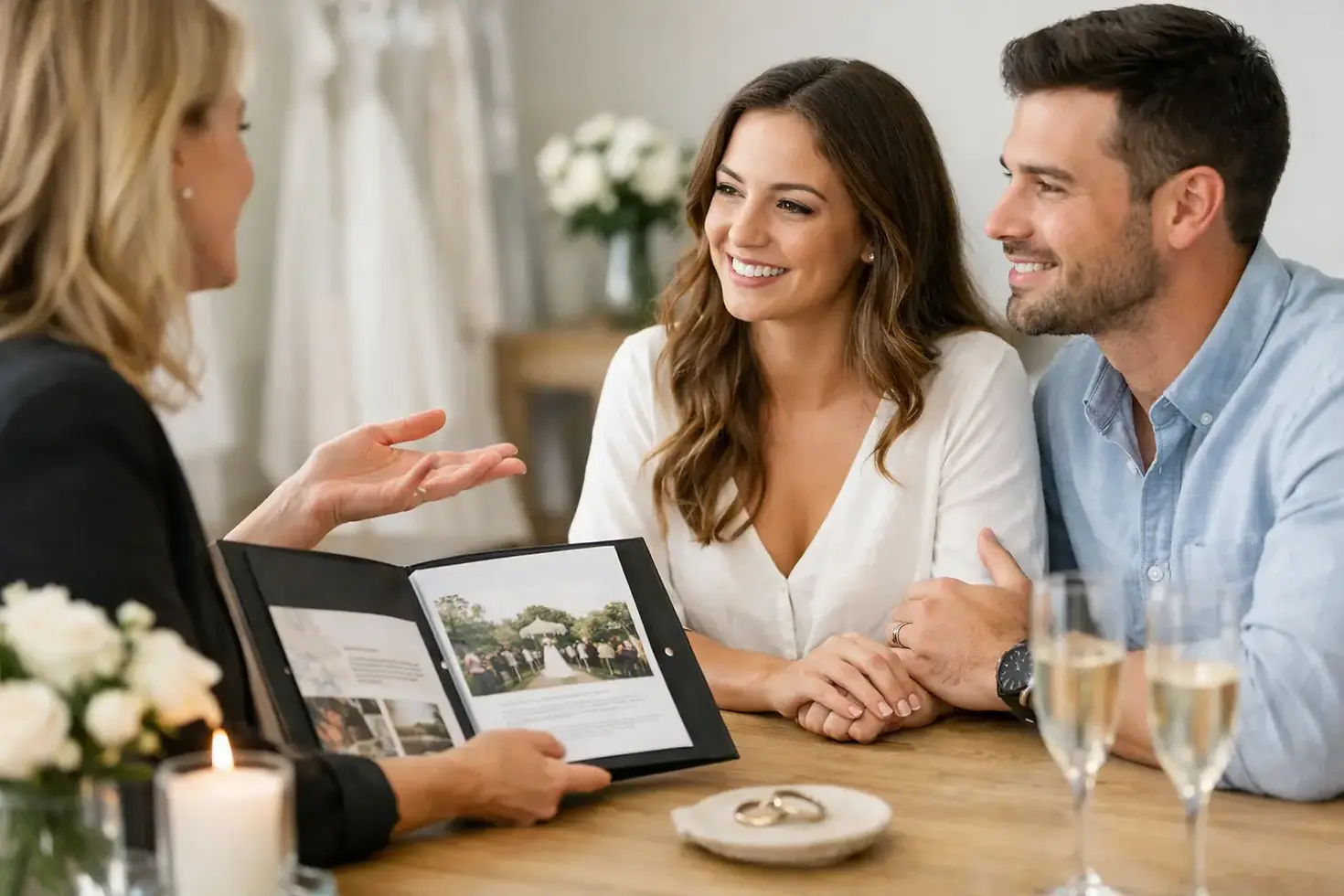
What a Wedding Ceremony Consultation Does
Before a single word is spoken at the altar, there is a quieter moment that shapes everything that follows. A wedding ceremony consultation is where the ceremony begins to take its true form - not as a script pulled from a template, but as a reflection of two people, their story, and the meaning they want to bring into the day.
For many couples, this conversation is the first time they are asked something deeper than timeline logistics or venue details. What do you want this moment to feel like? What parts of your relationship belong in the ceremony? What values do you want named, honored, and witnessed? Those questions matter because the ceremony is not just the prelude to the celebration. It is the heart of it.
Why a wedding ceremony consultation matters
A personalized ceremony rarely happens by accident. Even couples with a clear vision often find it difficult to put that vision into words on their own. They may know they want something romantic but not overly formal, spiritual but not religious, joyful without feeling too casual, or traditional in shape while still sounding like themselves. A wedding ceremony consultation creates space to sort through those layers with care.
This is where an officiant listens for what sits beneath the surface. Sometimes the most meaningful details are not grand gestures or dramatic milestones. They are the small rituals of daily life, the hard-won resilience of a relationship, the family bonds surrounding the couple, or the quiet promises they have already been keeping long before the wedding day arrived.
A good consultation also helps relieve pressure. Couples often feel as though they need to already know exactly what they want. In truth, many people begin with fragments - a tone, a value, a memory, a line they loved from another ceremony, or a strong sense of what they do not want. That is enough. The work of the consultation is to turn instinct into language.
What happens during a wedding ceremony consultation
Every officiant has a slightly different process, but the best consultations feel less like an interview and more like a guided, thoughtful conversation. There is usually room for practical matters, of course. The order of the ceremony, legal requirements, vows, ring exchange, family involvement, readings, and any cultural or spiritual elements all need attention.
But the real value lies in the deeper layer. A meaningful consultation explores how you met, what drew you together, how your relationship has grown, what you admire in one another, and how you hope your ceremony will feel to the people gathered around you. It may also touch on tenderness and nuance - blended families, grief, estrangement, differing faith backgrounds, private personalities, or the wish to honor tradition without being confined by it.
These details do not exist to make a ceremony sound impressive. They exist to make it ring true.
That truthfulness changes the entire experience. When a ceremony is shaped through genuine conversation, the words spoken on the day tend to land differently. Guests lean in. The couple feels seen. Even simple moments carry more emotional weight because they are anchored in something real.
The difference between a standard ceremony and a crafted one
There is nothing wrong with simplicity. Some couples want a brief and elegant ceremony, and that can be beautiful. Personalization does not have to mean lengthy or dramatic. It means intentional.
The difference is often not in the number of minutes, but in the quality of attention. A standard ceremony may cover the legal essentials and familiar phrases. A crafted ceremony does that too, but it also considers rhythm, tone, language, and emotional resonance. It asks whether the words sound like you. It notices whether the ceremony honors your beliefs, your boundaries, and your relationship rather than relying on assumptions.
This is especially important for couples who do not see themselves in conventional wedding language. Maybe you want inclusive wording. Maybe you are blending cultures. Maybe you are deeply spiritual but not tied to a specific religion. Maybe you want a ceremony that feels warm and sacred without becoming stiff or performative. These are not minor preferences. They shape whether the ceremony feels lived in or borrowed.
What to think about before your consultation
You do not need a finished vision before meeting with an officiant, but it helps to arrive with honesty. Think less about performing certainty and more about sharing what matters.
You might reflect on the atmosphere you want to create. Quiet and reverent? Light and joyful? Intimate and story-rich? You may also want to consider whether there are traditions you love, traditions you want to adapt, and traditions you would rather leave behind. If family involvement matters, this is a good time to think about who you want included and how.
It can also help to talk together about your comfort with public emotion. Some couples love deeply personal storytelling in front of guests. Others prefer tenderness with a little more privacy and restraint. Neither approach is better. The right ceremony is the one that honors your emotional style instead of forcing a version of romance that does not fit.
If you are writing personal vows, a consultation can also clarify how those vows will sit within the larger ceremony. Some couples want vows to carry most of the emotional detail, while others want the officiant's address to do more of that work. This balance matters, and it is one of the places where thoughtful guidance can make the ceremony feel cohesive rather than uneven.
The consultation is also about trust
A wedding ceremony asks a great deal of an officiant. They are not simply reading words into a microphone. They are holding the emotional center of a room, setting the pace, carrying transitions, and speaking into one of the most vulnerable and memorable moments of your life.
That is why the consultation is not only about planning the content. It is about sensing whether you feel comfortable, understood, and safe in this person's presence. Do they listen carefully? Do they make room for nuance? Do they seem interested in your relationship as it truly is, or are they steering you toward a predetermined script?
Trust matters because a ceremony becomes most powerful when the couple can relax inside it. When you trust the person guiding that moment, it is easier to be present. Easier to breathe. Easier to let the words reach you instead of worrying how the whole thing is coming across.
For couples who want something deeply personal, this relationship is central. That is part of what makes a consultation so much more than a scheduling call. It is the beginning of a collaborative creative process.
When personalization needs balance
There is also a gentle truth here: more personal is not always better. Sometimes couples feel pressure to include every meaningful story, every family acknowledgment, every symbol, every reading, every ritual. A consultation helps with discernment.
A strong ceremony is not a scrapbook of everything that matters. It is a carefully shaped experience. Some details are powerful because they are named. Others are powerful because they remain private. Some stories enrich the room. Others belong more naturally in a toast, a letter, or a quiet conversation later in the day.
An experienced officiant helps protect that balance. They can see when a ceremony needs more depth, and they can also see when it needs simplicity. Both instincts are acts of care.
Why this process can change how the day feels
Couples often spend months planning the visible parts of a wedding - the flowers, music, attire, seating, and food. All of those choices help create the atmosphere. But the ceremony is the moment that gives the day its grounding. It tells everyone present what this gathering means.
When that meaning has been thoughtfully shaped in a wedding ceremony consultation, the ceremony often feels calmer, fuller, and more emotionally coherent. You are not just moving through a series of expected motions. You are stepping into words that have been chosen with intention.
That can be especially moving for couples who have never felt fully represented by generic ceremony language. To hear your relationship described with care, to have your values reflected without awkwardness, to stand in a moment that feels sincere instead of scripted - that is where a ceremony becomes memorable in the deepest sense.
At Ceremonies By Hans, that consultation process is treated as sacred creative work, because the right words do more than fill time. They help a couple recognize themselves in the moment they are making.
If you are beginning to imagine your wedding ceremony, you do not need to have every answer already in hand. You only need a willingness to be known, to speak honestly, and to let the ceremony grow from what is true.


Comments