What Happens During a Wedding Rehearsal Night?
Updated: Sep 24
The ceremony site is quiet before everyone arrives. Then your favorite people begin gathering: a parent checking the time, a wedding party member searching for the right entrance, someone smiling nervously because they do not want to stand in the wrong place. That is exactly what happens during wedding rehearsal: the moving pieces become familiar, so the sacred moment ahead can feel less like a production and more like your wedding.
A rehearsal is not about performing the ceremony perfectly the night before. It is about giving the people who will support you a gentle, clear picture of where to be, when to move, and how the ceremony will unfold. With a little guidance, uncertainty gives way to ease.
What Happens During a Wedding Rehearsal?
Most rehearsals take place at the ceremony venue one or two days before the wedding. Your officiant, planner or coordinator will usually guide the group, though the exact rhythm depends on the venue, the size of the wedding party, and how personal or traditional your ceremony will be.
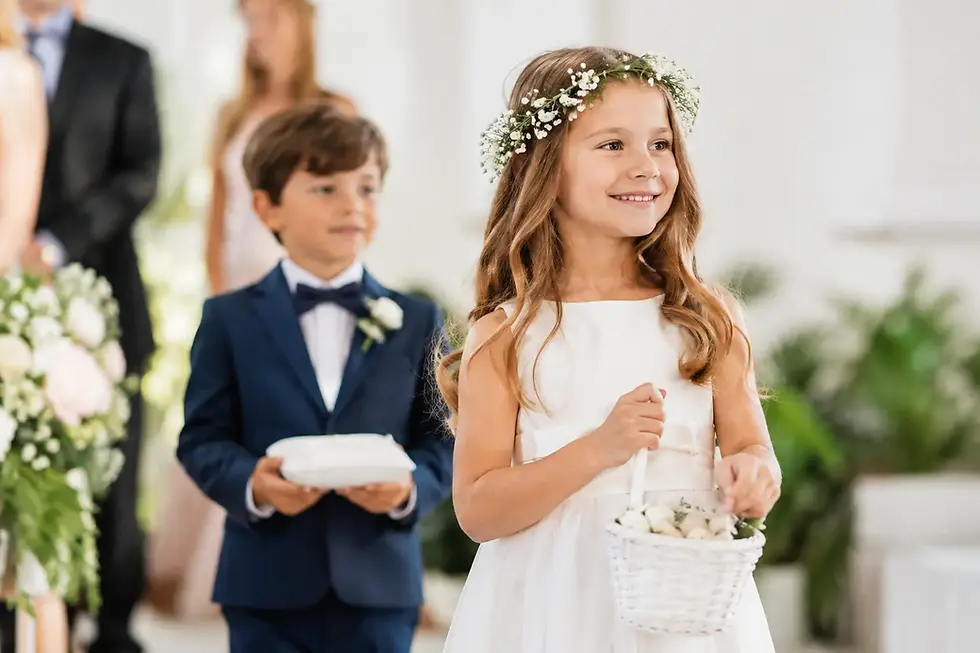
The group often includes the couple, the officiant, wedding party, parents or other important family members, readers, musicians if they need cues, and anyone with a special role. Flower children, ring bearers, or beloved pets may attend too, although very young children do not always need to stay for the entire run-through.
The gathering begins with a few grounding details. Where should everyone wait before the ceremony? Which doors or paths will be used? Where will guests be seated? Who has the rings? These practical answers are surprisingly reassuring. When everyone knows the plan, you are freed to be present with one another.
Walking Through the Processional
The processional is usually the first part rehearsed. This is the entrance: who walks, in what order, with whom, and where each person stands when they reach the front.
Your officiant or coordinator may ask everyone to practice their walk once or twice. They will point out the pace, suggest a pause between pairs, and help each person find their place. The goal is not military precision. A processional should have room to breathe. Walking a little more slowly than feels natural often creates a calmer, more graceful entrance.
This is also when small but meaningful choices become visible. Perhaps one partner will enter with both parents. Perhaps grandparents will be honored with a special entrance, or the couple will walk in together. Perhaps there is no formal wedding party at all. A rehearsal makes space for the ceremony to reflect your real relationships rather than someone else’s expectations.
Finding Your Places at the Front
Once everyone has arrived at the ceremony space, the officiant will show the wedding party where to stand and where the couple will be positioned. This matters more than people expect. A slight adjustment can help everyone see, keep faces open to guests, and leave room for photographs without making the moment feel staged.
If you are using a chuppah, arbor, circular seating arrangement, or another nontraditional setup, this portion is especially helpful. Your officiant can consider sight lines, microphones, the placement of musicians, and how you will move through the space. If one partner is much taller, if a family member uses a mobility aid, or if the ground is uneven, the rehearsal is the time to make a thoughtful adjustment.
You may also practice how bouquets will be held or handed off, where hands will rest during the ceremony, and who will straighten a train or veil. These are tiny details, but knowing them ahead of time helps everyone feel less self-conscious.
Practicing the Meaningful Moments
A wedding rehearsal does not usually involve reading every word of the ceremony. Your vows and the stories held within your ceremony deserve to feel alive, not over-rehearsed. Still, your officiant will explain the shape of what is coming.
They may indicate when you will be invited to join hands, when a reader will come forward, or when a unity ritual will take place. If you are exchanging rings, you will confirm who carries them and when they are handed over. If you have written personal vows, you may decide whether to hold vow books, ask someone to keep them nearby, or repeat vows line by line.
For a ceremony with a candle lighting, handfasting, wine ritual, sand blending, tree planting, or another symbolic act, a brief practice is wise. You do not need to enact every word. You simply want to understand the movement and timing, especially if several people are involved.
There is a gentle trade-off here. A detailed rehearsal can calm nerves, but too much repetition can make the next day feel overly choreographed. The best approach gives everyone confidence in the logistics while preserving the emotional immediacy of the ceremony itself.
The Recessional and the Small Details People Forget
After the kiss or closing words, there is a natural burst of joy. That is why the recessional deserves a practice too. The newlyweds usually leave first, followed by the wedding party and then, depending on the plan, family members. Your coordinator or officiant can explain where everyone goes afterward, whether that is a private moment together, family photos, a receiving line, or cocktail hour.
A few overlooked questions are worth settling before the rehearsal ends:
Who will cue the music for each entrance and exit?
Who will hold bouquets during the ring exchange or unity ritual?
Where should readers wait before they are invited forward?
Who signs the marriage license, and when will that happen?
What is the rain or weather plan if the ceremony is outdoors?
For legal paperwork, follow the requirements of the place where you are marrying and the direction of your officiant. The rehearsal is a useful time to confirm who needs to be present and to make sure the license is kept somewhere safe, but it is rarely the time to sign it.
How Long Does a Wedding Rehearsal Take?
Most wedding rehearsals take about 30 to 60 minutes. An intimate ceremony with no wedding party may take less time. A larger event with multiple entrances, cultural traditions, live musicians, readings, or a complex venue layout may need longer.
Try to arrive with enough margin that no one feels rushed. If the venue has a strict access window, share it clearly with your wedding party beforehand. It also helps to send everyone a simple note naming the time, location, expected attire, and whether they should bring anything.
You do not need a fully decorated space to rehearse well. In fact, the ceremony space may look quite different on the wedding day. A few visual markers, such as chairs, tape, or an imagined aisle, are enough to establish the flow. What matters is that people understand their role and can feel the rhythm of the moment.
Rehearsal Dinner Is Separate, but Connected
The rehearsal dinner often follows the run-through, but it is not part of the formal rehearsal itself. It can be a restaurant meal, a backyard gathering, a casual welcome party, or a quiet dinner with only immediate family and the wedding party.
Its deeper purpose is simple: it gives the people closest to you a chance to exhale together before the celebration begins. This is a lovely time for toasts, gratitude, and introductions between people who may be meeting for the first time. Keep the evening as calm as you can. The night before your wedding does not need to become another event you have to host perfectly.
Let the Rehearsal Support the Moment, Not Control It
You may laugh when someone walks in at the wrong moment. A flower child may decide the aisle is not their calling. Someone may forget which side they are meant to stand on. None of this predicts a problem on the wedding day. Often, these little human moments are exactly what help everyone relax.
A caring officiant will bring calm direction without taking over. At Ceremonies By Hans, the rehearsal is approached as a thoughtful bridge between planning and presence: a chance to honor the people standing beside you, clarify the practical details, and make room for what truly matters.
When the ceremony begins, you will not need to remember every cue. You only need to look at the person you are choosing, listen to the words that hold your story, and let the people who love you help carry the rest.


Comments